Thinking about buying in Central Arkansas but not sure where to focus? Ward is getting more attention for a simple reason: it gives you a smaller-city setting with solid access to nearby job centers, everyday conveniences, and a housing market that still feels more approachable than some surrounding areas. If you are trying to balance budget, commute, and lifestyle, Ward deserves a closer look. Let’s dive in.
Ward is growing fast
One of the biggest reasons buyers are looking at Ward is momentum. The U.S. Census Bureau estimates the city’s population at 7,022 as of July 1, 2024, up from 6,052 in 2020. That kind of growth tells you more people are choosing Ward as a place to live.
Growth does not automatically mean a market is right for you, but it often signals rising awareness and demand. In Ward’s case, the numbers support what many buyers are already noticing: this is a community that is expanding while keeping a more residential, small-city feel.
Ward offers commuter convenience
Location is a big part of Ward’s appeal. The city describes itself as a bedroom community, and that fits the data. Census figures show a mean travel time to work of 29.0 minutes, which is consistent with a commuter-oriented market rather than a place where most residents work locally.
According to the city, more than 90% of residents work elsewhere, and about half of those commuters work in Pulaski County. Ward also highlights access to nearby places like Cabot, Beebe, Jacksonville, and Little Rock Air Force Base. If you want to live outside a larger job center but still stay connected to it, Ward can make that setup easier.
The city’s location also adds flexibility to daily life. Ward sits about 5 miles north of Cabot and 5 miles south of Beebe, near I-57 exit 25, which helps residents reach nearby shopping, services, and work destinations without giving up a quieter home base.
Home values feel more attainable
For many buyers, affordability is where Ward starts to stand out. The median value of owner-occupied homes is $189,100, with median monthly owner costs of $1,217 with a mortgage and $406 without one. Median gross rent is $1,202, and median household income is $72,734.
Compared with the Little Rock metro area, Ward’s housing profile looks especially appealing for buyers who want value without feeling like they are shopping in a deeply distressed or ultra-limited market. Census Reporter data shows Ward’s median home value at $189,100 versus $214,100 for the Little Rock metro area, while staying close to the Arkansas median of $188,000.
That matters if you are trying to get more house for your money or make a move without stretching too far. Ward is not just “cheap.” It reads more as a value-oriented market where your budget may go further than in some nearby areas.
The housing stock fits what many buyers want
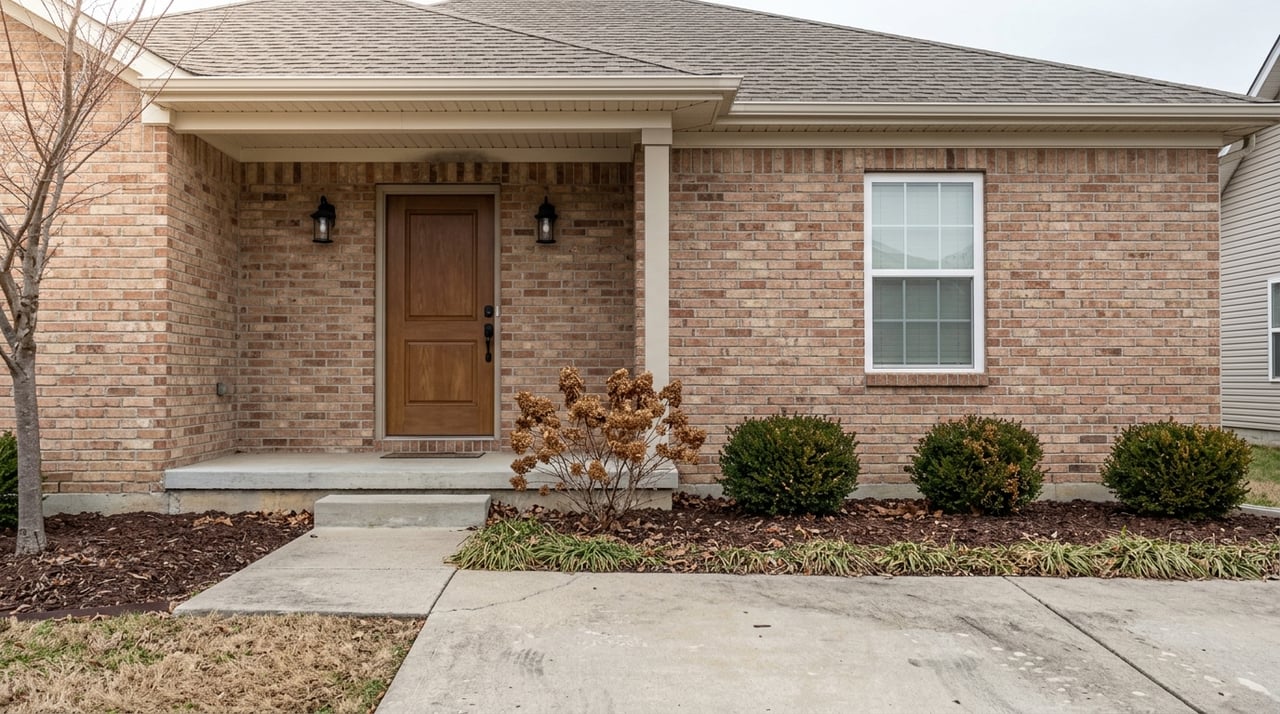
Another reason buyers are paying attention is the type of homes available. A Census-based housing profile from Point2Homes reports that 82.4% of Ward’s housing stock is detached single-family homes. It also notes a median construction year of 2006, with about one-third of homes built in 2000 to 2009 and another third built in 2010 to 2019.
That combination is attractive if you are looking for a more suburban housing mix. In practical terms, it means Ward has a lot of homes that align with what many Central Arkansas buyers want: single-family properties, newer construction by historical standards, and neighborhoods shaped by more recent growth.
Ward also has 2,590 housing units, according to the Census Bureau, and an owner-occupied rate of 69.0%. Those numbers suggest a market with a strong ownership base, which can appeal to buyers who prefer established residential areas over a heavily renter-dominated environment.
Ward supports a suburban lifestyle
When buyers ask what Ward feels like, the answer is usually tied to everyday livability. The city presents itself as a community-oriented, residential place with parks and recreation, library access, shopping and dining, worship options, animal services, and city communications. It also highlights local traditions like an annual 4th of July event and a youth fishing derby.
That kind of setup appeals to buyers who want a home base that feels practical and connected. You may not be moving to Ward for a dense urban experience. You are more likely choosing it because it offers room to live, familiar routines, and local amenities that support day-to-day life.
The city’s Parks and Recreation department operates the Ward Sports Complex and ball park at 9 Industrial Drive and says it offers programs for sports, nature, and families. For many buyers, access to parks and recreation is an important part of evaluating how a place will function beyond the house itself.
Daily needs are close by
Ward also works well for buyers who want nearby basics without needing every errand to happen in a larger city. The city’s shopping and dining page lists local options like Love’s Donuts, Jalapeno’s Mexican Grill, Circle K, Shamrock Gas Station, and Dollar General.
That does not mean Ward has the full retail depth of a larger market. Instead, it means many daily needs can be handled locally, while Cabot and Beebe remain close for broader shopping and services. For a lot of buyers, that balance feels just right.
Buyers with kids often notice the school access
For households comparing locations, school logistics are often part of the conversation. Ward is served by Cabot Public Schools, and the city says the district serves students in Cabot, Ward, Austin, and most of northwestern Lonoke County across 17 campuses. Ward Central Elementary is the local elementary school at 1570 Wilson Loop Road.
Cabot Public Schools also says the district serves more than 10,000 students in grades PK-12. In addition, the city notes the district’s Purple Star designation for military-family support, which may be relevant for households connected to the regional military employment base.
Ward also offers access to nearby education and community resources. The city points to ASU-Beebe, about 5 miles north in Beebe, and to the Lonoke County Library System branch in Cabot for library services. If you are comparing practical day-to-day convenience, these nearby resources can add to Ward’s appeal.
The population profile matches buyer demand
Ward’s demographics also help explain why the city is drawing interest. Census Reporter shows a median age of 30.2, with 28.9% of residents under 18 and an average household size of 2.85.
Those numbers point to a relatively young population and a household mix that fits the kind of suburban buyer demand often seen in this part of Central Arkansas. If you are searching for a market with a strong residential focus and newer household growth, Ward checks several of those boxes.
Why Ward stands out right now
Put it all together, and the draw becomes pretty clear. Ward combines population growth, commuter access, a strong share of single-family housing, and home values that compare favorably with the broader metro area. It also offers a residential setting with local parks, nearby services, and access to schools and regional job centers.
That does not make Ward the right fit for every buyer. But if you want a smaller-city environment with newer housing patterns, practical access to Cabot and Beebe, and a market that still looks value-conscious, Ward is easy to understand.
If you are considering a move to Ward or comparing it with nearby areas, working with a local agent can help you narrow down neighborhoods, price points, and home styles that fit your goals. Brooke Wheeler offers full-service guidance for buyers who want clear communication, strong local insight, and support through every step of the process.
FAQs
Why are homebuyers looking at Ward, AR?
- Buyers are looking at Ward because it offers a growing small-city setting, commuter access to nearby job centers, a housing market centered on single-family homes, and median home values that are lower than the Little Rock metro area.
How far is Ward, AR from Cabot and Beebe?
- Ward is about 5 miles north of Cabot and about 5 miles south of Beebe, according to the city.
Is Ward, AR a commuter community?
- Yes. The city describes Ward as a bedroom community, and Census data shows a mean travel time to work of 29.0 minutes.
What types of homes are common in Ward, AR?
- Detached single-family homes are the dominant housing type in Ward, making up 82.4% of the housing stock according to a Census-based Point2Homes profile.
What school district serves Ward, AR?
- Ward is served by Cabot Public Schools, and Ward Central Elementary is the local elementary school listed by the city.
Is Ward, AR growing?
- Yes. The U.S. Census Bureau estimates Ward’s population grew from 6,052 in 2020 to 7,022 in 2024.